Here are the comics we added to our library collection last week:
Pekar, Harvey. Ego & hubris : the Michael Malice story /New York : Ballantine Books, c2006.
Sim, Dave. Cerebus guide to self publishing /[Kitchener, Ont.? : s.n.], c1997.
Ware, Chris, 1967- Jimmy Corrigan : the smartest kid on earth. /New York : Pantheon Books, c2000.
Tuesday, 12 September 2006


TokyoPop & Viz Output
Over at Crocodile Caucus, Lyle asks:
It's a good question. In terms of sheer number of volumes, TP & Viz put out about the same number of titles per month, but they definitely have a different image in the comics blogosphere. Some of the responder comments point to things like quality, shipping schedule, and Viz's use of imprints.
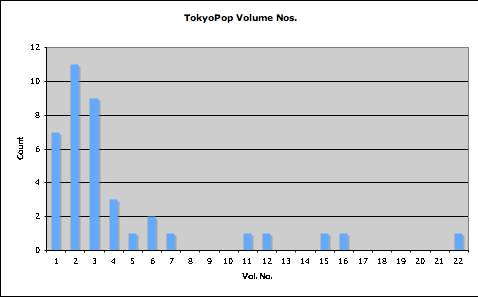
Those are some good anectdotal possibilities--and when you're dealing with perception, anectdotal evidence can go a long way. But I suspected there was something else going on as well, so I did some number crunching. I looked at the TP & Viz sections in the current issue of Previews (September, for items supposedly on sale in November). A pure count shows that TP has 39 volumes, Viz has 38 (for purposes of this analysis I didn't count Shojo Beat or Shonen Jump). But then I counted how many titles each publisher had with a particular volume number; i.e. how many titles were on vol. 1, how many on vol. 2, etc. Here are the results in handy histograms:
TokyoPop:
Viz:
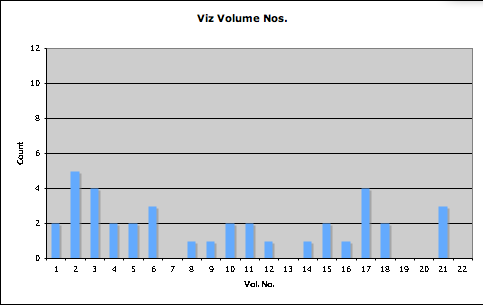
As can be plainly seen from these graphs, TP's output is weighted far more towards the early volume numbers, while Viz's output as a whole is far more mature. The median volume number for TP is 3, while the median for Viz is 8.5.*
So that's where the “throw it at the wall and see what sticks” image for TP comes from; they're putting out a lot more new series every month, while Viz is more likely to stick with longer-running series. This means that each month readers and retailers are faced with an array of many new choices (or ordering decisions) from TP, while with Viz they know more what they're getting into.
Just another piece of the puzzle.
(* You might be tempted to try to take an average, but I think that your college statistics professor would likely have told you that you cannot take averages of ordinal data.)
Update: Three months worth of data graphed here.
Why does the large number of titles that Tokyopop publishes inspire phrases like “flooding the market” and “throw it at the wall and see what sticks” when Viz, who also publishes a large number of titles never generates the same complaint?
It's a good question. In terms of sheer number of volumes, TP & Viz put out about the same number of titles per month, but they definitely have a different image in the comics blogosphere. Some of the responder comments point to things like quality, shipping schedule, and Viz's use of imprints.
Those are some good anectdotal possibilities--and when you're dealing with perception, anectdotal evidence can go a long way. But I suspected there was something else going on as well, so I did some number crunching. I looked at the TP & Viz sections in the current issue of Previews (September, for items supposedly on sale in November). A pure count shows that TP has 39 volumes, Viz has 38 (for purposes of this analysis I didn't count Shojo Beat or Shonen Jump). But then I counted how many titles each publisher had with a particular volume number; i.e. how many titles were on vol. 1, how many on vol. 2, etc. Here are the results in handy histograms:
TokyoPop:
Viz:
As can be plainly seen from these graphs, TP's output is weighted far more towards the early volume numbers, while Viz's output as a whole is far more mature. The median volume number for TP is 3, while the median for Viz is 8.5.*
So that's where the “throw it at the wall and see what sticks” image for TP comes from; they're putting out a lot more new series every month, while Viz is more likely to stick with longer-running series. This means that each month readers and retailers are faced with an array of many new choices (or ordering decisions) from TP, while with Viz they know more what they're getting into.
Just another piece of the puzzle.
(* You might be tempted to try to take an average, but I think that your college statistics professor would likely have told you that you cannot take averages of ordinal data.)
Update: Three months worth of data graphed here.
Monday, 11 September 2006
Minicomics Monday
Two minicomics from Drew Weing:
 Blar is a fun little comic that parodies barbarian parody comics, like Groo and Thrud. Through several short stories, Blar--the titular barbarian--uses his sword to slice easily and wordlessly through a host of enemies, often hillariously. Weing has a fun drawing style with a light line that recalls E.C. Segar's Popeye a bit. (samples here)
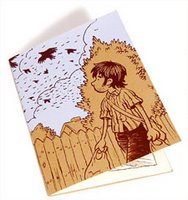 Untitled is, in fact, untitled. In a series of one-panel pages, Weing draws himself coming home from the market, when suddenly all reality breaks loose and he has to wander through a void in search of his love, Eleanor. It's an exercise in formalism that compares favorably with the work of Kevin Huizenga.
I enjoyed both of these comics, and I see from Weing's Website that he has a few more available; I'll look to get them from Little House Comics, where Weing's (and Eleanor's) minis can be purchased.
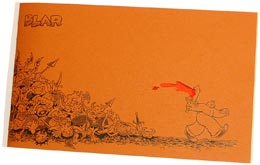 Blar is a fun little comic that parodies barbarian parody comics, like Groo and Thrud. Through several short stories, Blar--the titular barbarian--uses his sword to slice easily and wordlessly through a host of enemies, often hillariously. Weing has a fun drawing style with a light line that recalls E.C. Segar's Popeye a bit. (samples here)
 Untitled is, in fact, untitled. In a series of one-panel pages, Weing draws himself coming home from the market, when suddenly all reality breaks loose and he has to wander through a void in search of his love, Eleanor. It's an exercise in formalism that compares favorably with the work of Kevin Huizenga.
I enjoyed both of these comics, and I see from Weing's Website that he has a few more available; I'll look to get them from Little House Comics, where Weing's (and Eleanor's) minis can be purchased.
What's Distracting Patricia?
Dave Lartigue asks: What's Distracting Patricia?
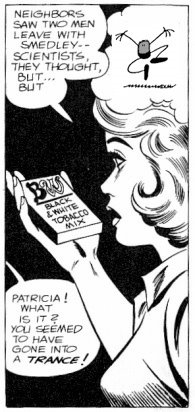
She's obviously pondering the wonders and mysteries of Larry Marder's The Beanworld! (It is, after all, a most peculiar comic book experience...)
She's obviously pondering the wonders and mysteries of Larry Marder's The Beanworld! (It is, after all, a most peculiar comic book experience...)
Sunday, 10 September 2006
Monkey Covers
 Sunday is Monkey Covers day here at YACB. Because there's nothing better than a comic with a monkey on the cover.
From just this past week we have J. G. Jones's cover to 52 week 18, featuring Detective Chimp investigating the mystery surrounding Dr. Fate's helmet.
(Standard disclaimer about chimpanzee detectives not really being monkeys applies.)
Image courtesy of the GCD. Click on the image for a larger version.
Saturday, 9 September 2006
Star Trek Comics, part 2
We're celebrating the 40th Anniversary of Star Trek by taking a look at Star Trek comics through the ages. In Part 1 we looked at the first 30 years of Trek comics, and at the end of 1995 Paramount did not renew the licenses of DC and Malibu, leaving the fate of Star Trek comic adventures up in the air. Now, read on:
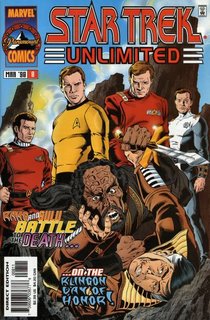
After 30 yers of licensing Star Trek to various comics companies, Paramount decided to produce their own series of Trek comics. Or, rather to hire Marvel to do it for them. In late 1996 Paramount Comics debuted as an imprint at Marvel, with not one or two but several comics devoted to Trek. Star Trek Unlimited was a doubled-sized bi-monthly that featured two stories in each issue: one Classic Trek and one Next Generaion.
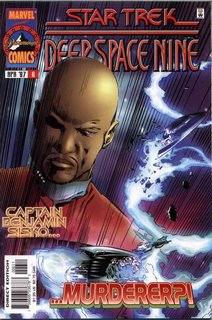
There were also ongoing monthly series based on the two Trek properties that were airing at the time, Deep Space Nine and Voyager. Both were decent reads, but hardly essential.
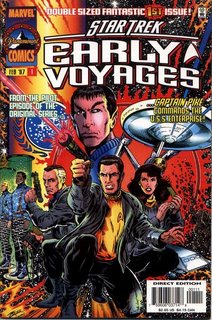
The best of the lot of this new batch of Trek comics were two series that were not directly based on an existing Trek show. Star Trek: Early Voyages showed the adventures of of the Enterprise crew before Captain Kirk. Captain Pike was in command, with a young Mr. Spock and the enigmatic Number One in tow.
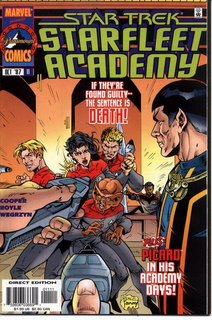
The most surprising of the new series was Star Trek: Starfleet Academy, which followed Nog from Deep Space Nine to Starfleet Academy an introduced a group of new cadets. By tying into the backstory of the Dominion War storyline from DS9, Starfleet Academy managed to be entertaining and worthwhile reading.
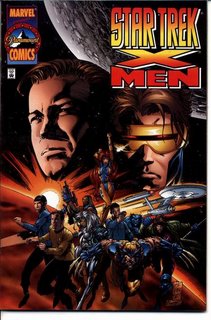
The most infamous comic of the Paramount/Marvel collaboration was Star Trek/X-Men, a one-shot that featured the meeting of Kirk's classic Trek crew and Marvel's most popular franchise. If it sounds like a bad idea, well, it was. If readers ever needed proof that super-heroes and classic science fiction didn't mesh well, here it was in four color glory. Despite the train wreck, it must have sold well enough because a year and a half later there was a sequel, Star Trek: The Next Generation/X-Men.
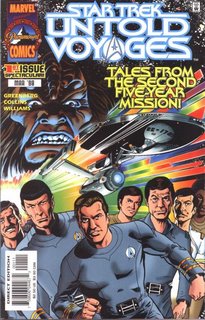
In early 1998 another ongoing series joined the line-up: Star Trek: Untold Voyages told of the post-Star Trek: The Motion Picture Enterprise crew, with Kirk et al. on a second five year mission in their pajamas. But it was to be short-lived; it turns out that 1997-1998 was a horrible time to enter into the comics business, what with the collapse of the speculator bubble a couple of years previous and the near suicide distribution move by Marvel that thrust them into bankruptcy and almost brought down the entire direct market with them. In mid-1998, just a year and a half after its debut, Paramount Comics folded, taking Trek comics with them.
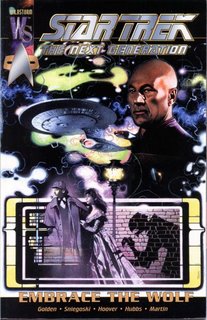
The Trek franchise would lie fallow for two years, until in 2000 it was licensed out again, this time to WildStorm (now an imprint of DC). WildStorm produced a series of one-shots and mini-series related to the Next Generation, Deep Space Nine, and Voyager franchises.
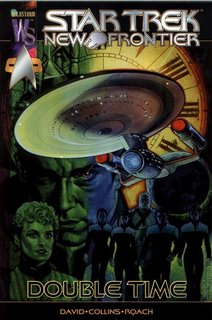
WildStorm even brought Peter David back to Trek comics with Double Time, a one-shot based on David's highly successful New Frontier novel series.
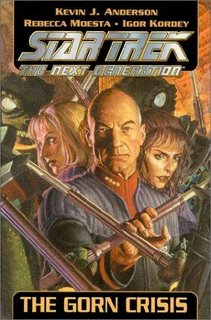
But by this time interest in Trek was declining, and despite bringing in big name Sci-Fi author Kevin J. Anderson to write The Gorn Crisis, a hardcover OGN, WildStorm could not drum up enough interest to make the Trek license worthwhile and let it quitely lapse, with little attention paid by fans. Thus Trek entered into its longest ever abscense from the comic shelves, with the new television series, Star Trek: Enterprise, coming and going without a comic book companion.
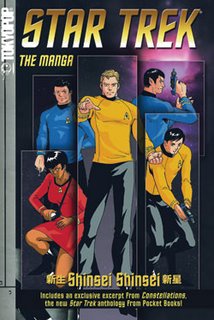
But in 2006, coinciding with Trek's 40th anniversary, Star Trek comics would return from an unlikely source: TokyoPop. Star Trek: The Manga was an OEL manga anthology of stories based on the original series, done in a manga style. Reactions were mixed, as many traditionalists weren't quite sure how to take this new spin on a venerable franchise.
There's no news yet as to whether TokyoPop will continue to produce Trek manga, leaving the fate of Star Trek in comics up in the air. But after a forty year legacy, surely this is not the last we'll see of Trek comics, leaving fans to wonder just if/when a Star Trek Webcomic will make an appearance...
(images courtesy of the GCD and other places)

After 30 yers of licensing Star Trek to various comics companies, Paramount decided to produce their own series of Trek comics. Or, rather to hire Marvel to do it for them. In late 1996 Paramount Comics debuted as an imprint at Marvel, with not one or two but several comics devoted to Trek. Star Trek Unlimited was a doubled-sized bi-monthly that featured two stories in each issue: one Classic Trek and one Next Generaion.

There were also ongoing monthly series based on the two Trek properties that were airing at the time, Deep Space Nine and Voyager. Both were decent reads, but hardly essential.
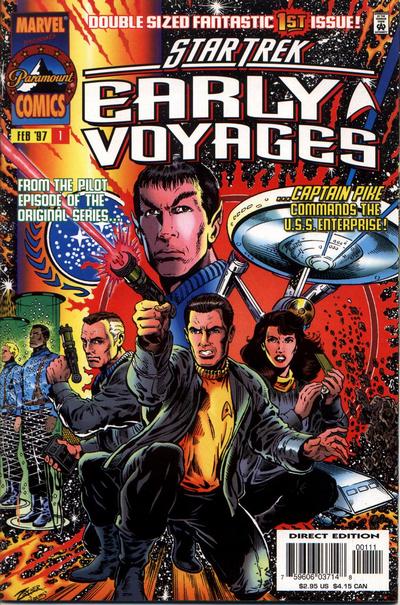
The best of the lot of this new batch of Trek comics were two series that were not directly based on an existing Trek show. Star Trek: Early Voyages showed the adventures of of the Enterprise crew before Captain Kirk. Captain Pike was in command, with a young Mr. Spock and the enigmatic Number One in tow.
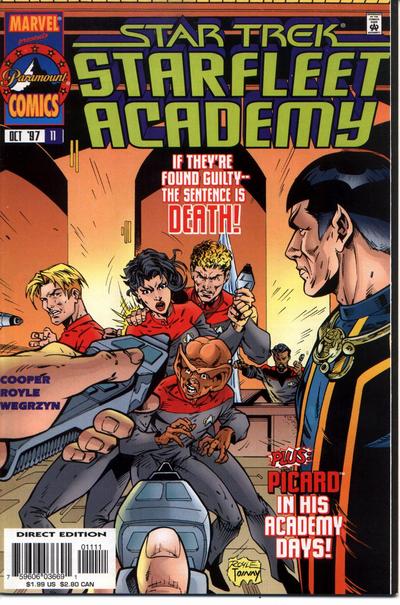
The most surprising of the new series was Star Trek: Starfleet Academy, which followed Nog from Deep Space Nine to Starfleet Academy an introduced a group of new cadets. By tying into the backstory of the Dominion War storyline from DS9, Starfleet Academy managed to be entertaining and worthwhile reading.
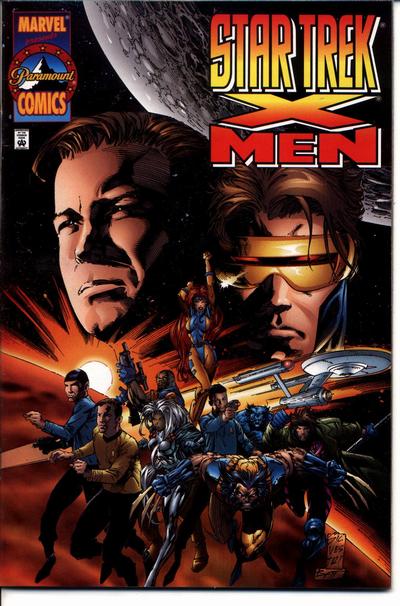
The most infamous comic of the Paramount/Marvel collaboration was Star Trek/X-Men, a one-shot that featured the meeting of Kirk's classic Trek crew and Marvel's most popular franchise. If it sounds like a bad idea, well, it was. If readers ever needed proof that super-heroes and classic science fiction didn't mesh well, here it was in four color glory. Despite the train wreck, it must have sold well enough because a year and a half later there was a sequel, Star Trek: The Next Generation/X-Men.
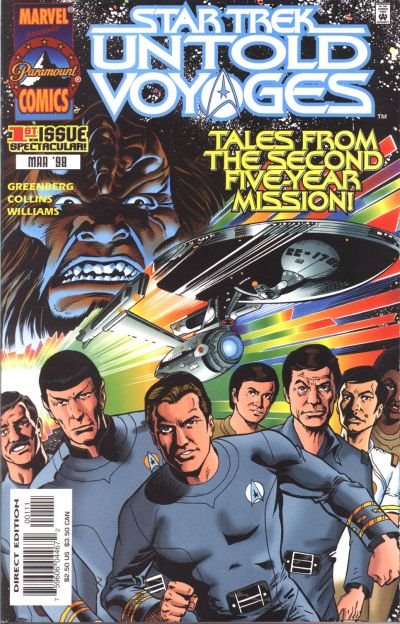
In early 1998 another ongoing series joined the line-up: Star Trek: Untold Voyages told of the post-Star Trek: The Motion Picture Enterprise crew, with Kirk et al. on a second five year mission in their pajamas. But it was to be short-lived; it turns out that 1997-1998 was a horrible time to enter into the comics business, what with the collapse of the speculator bubble a couple of years previous and the near suicide distribution move by Marvel that thrust them into bankruptcy and almost brought down the entire direct market with them. In mid-1998, just a year and a half after its debut, Paramount Comics folded, taking Trek comics with them.
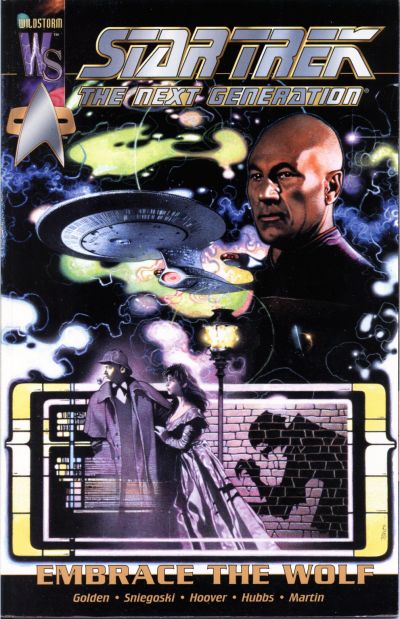
The Trek franchise would lie fallow for two years, until in 2000 it was licensed out again, this time to WildStorm (now an imprint of DC). WildStorm produced a series of one-shots and mini-series related to the Next Generation, Deep Space Nine, and Voyager franchises.
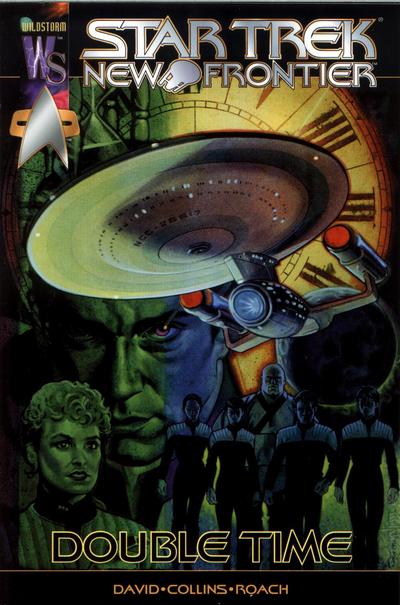
WildStorm even brought Peter David back to Trek comics with Double Time, a one-shot based on David's highly successful New Frontier novel series.

But by this time interest in Trek was declining, and despite bringing in big name Sci-Fi author Kevin J. Anderson to write The Gorn Crisis, a hardcover OGN, WildStorm could not drum up enough interest to make the Trek license worthwhile and let it quitely lapse, with little attention paid by fans. Thus Trek entered into its longest ever abscense from the comic shelves, with the new television series, Star Trek: Enterprise, coming and going without a comic book companion.
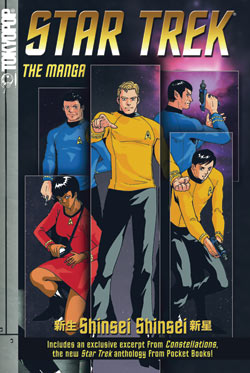
But in 2006, coinciding with Trek's 40th anniversary, Star Trek comics would return from an unlikely source: TokyoPop. Star Trek: The Manga was an OEL manga anthology of stories based on the original series, done in a manga style. Reactions were mixed, as many traditionalists weren't quite sure how to take this new spin on a venerable franchise.
There's no news yet as to whether TokyoPop will continue to produce Trek manga, leaving the fate of Star Trek in comics up in the air. But after a forty year legacy, surely this is not the last we'll see of Trek comics, leaving fans to wonder just if/when a Star Trek Webcomic will make an appearance...
(images courtesy of the GCD and other places)
Friday, 8 September 2006
Star Trek Comics, part 1
It's the 40th anniversary of Star Trek. To celebrate, let's look back at nearly 40 years of Star Trek comics
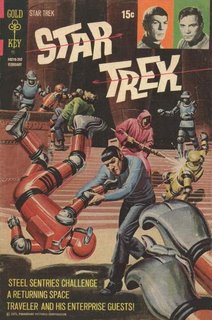
The first Star Trek comics started in mid-1967 from Gold Key, and ran long past the demise of the show to 1979 (61 issues in all, though I think that some reprinted earlier material). They are mostly remembered by Trek fans as bearing little resemblance to the Star Trek show; it often seemed as though they just took stock scifi comics situations and inserted Kirk, Spock, et al. Still, some of those covers were pretty fun! (Checker has been reprinting the Gold Key Star Trek in trade collections.)
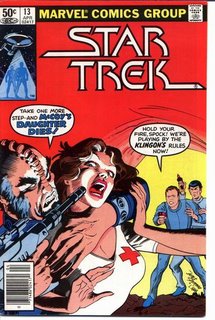
In the wake of Star Trek: The Motion Picture, Marvel picked up the Star Trek license in 1980, taking the same approach they did with the Star Wars license by adapting the movie then continuing with original stories. Alas for Marvel Trek was not as successful as Wars, and the series lasted just 18 issues before receiving the axe.
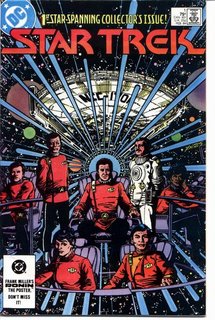
The Wrath of Khan came and went with no Trek comic in sight, but shortly before The Search for Spock DC picked up the Trek license. Early stories were by Mike W. Barr and Tom Sutton, and marked the first time (IMHO) that Trek comics managed to get close to the flavor of actual Star Trek. later issues of the series would feature Peter David's debut as a Trek writer.
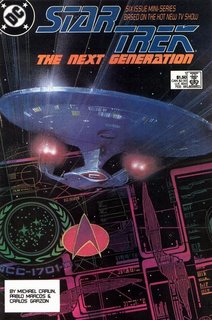
DC also picked up the license for The Next Generation, producing a six-issue mini-series along with the show's first season.
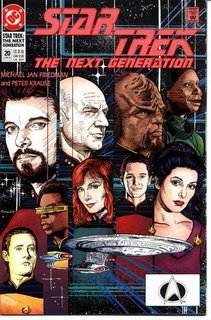
Then there was an 11-month gap in DC's Star Trek comics; I'm not sure exactly what happened, but I suspect that the license lapsed and Paramount went looking for a higher bidder. If that was the case, they found none, and Trek ended up back at DC in 1989, with both classic Trek and TNG starting new ongoing series.
Jerome K. Moore was onboard as the regular cover artist, producing some great-looking covers that were reminiscent of movie posters.
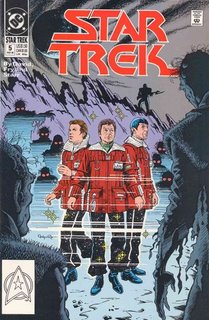
DC's second classic Trek series was also notable for the supposed rift that developed between writer Peter David and an assistant of Gene Roddenberry's. The assistant reportedly reject out of hand any script submitted with David's name on it, often requesting outlanding changes. When DC submitted a script by David with a pseudonym attached, the script came back without changes, prompting David to resign, feeling that some sort of personal vendetta was keeping DC from baing able to produce a good Trek comic.
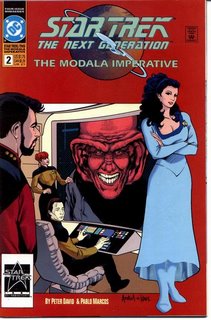
DC also produced The Modala Imperative, a cross-over of sorts with a story that began in a four-issue classic Trek series and concluded in a TNG mini.
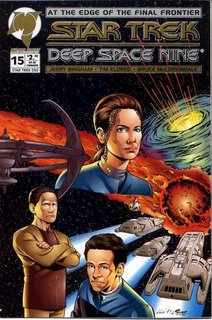
This time period also saw a Deep Space Nine comic, but it was Malibu, not DC, that picked up the license. They produced fifteen issues of an ongoing, plus several separate mini-series.
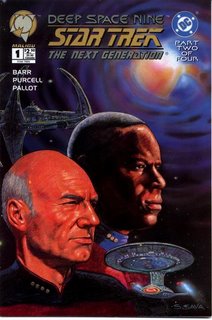
DC and Malibu even cooperated on a DS9/TNG crossover mini, with each company publishing two parts of the four part series.
Both of the ongoing Trek series from DC lasted another 80 issues before DC the license lapsed at the end of 1995. Malibu's license ended at this time too, and Paramount did not renew any of the Trek licenses. But that was not the end of Trek comics; Paramount had plans of their own, which we'll see in Part 2 (coming real soon, I promise!)
(all images courtesy of the GCD)
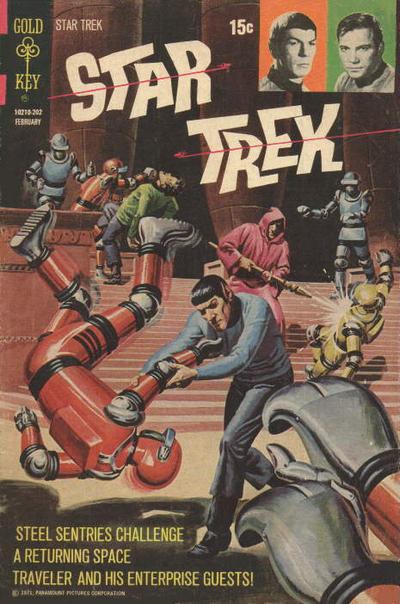
The first Star Trek comics started in mid-1967 from Gold Key, and ran long past the demise of the show to 1979 (61 issues in all, though I think that some reprinted earlier material). They are mostly remembered by Trek fans as bearing little resemblance to the Star Trek show; it often seemed as though they just took stock scifi comics situations and inserted Kirk, Spock, et al. Still, some of those covers were pretty fun! (Checker has been reprinting the Gold Key Star Trek in trade collections.)

In the wake of Star Trek: The Motion Picture, Marvel picked up the Star Trek license in 1980, taking the same approach they did with the Star Wars license by adapting the movie then continuing with original stories. Alas for Marvel Trek was not as successful as Wars, and the series lasted just 18 issues before receiving the axe.

The Wrath of Khan came and went with no Trek comic in sight, but shortly before The Search for Spock DC picked up the Trek license. Early stories were by Mike W. Barr and Tom Sutton, and marked the first time (IMHO) that Trek comics managed to get close to the flavor of actual Star Trek. later issues of the series would feature Peter David's debut as a Trek writer.

DC also picked up the license for The Next Generation, producing a six-issue mini-series along with the show's first season.

Then there was an 11-month gap in DC's Star Trek comics; I'm not sure exactly what happened, but I suspect that the license lapsed and Paramount went looking for a higher bidder. If that was the case, they found none, and Trek ended up back at DC in 1989, with both classic Trek and TNG starting new ongoing series.
Jerome K. Moore was onboard as the regular cover artist, producing some great-looking covers that were reminiscent of movie posters.
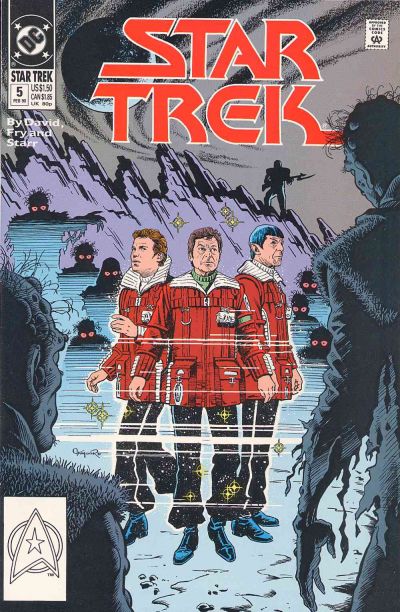
DC's second classic Trek series was also notable for the supposed rift that developed between writer Peter David and an assistant of Gene Roddenberry's. The assistant reportedly reject out of hand any script submitted with David's name on it, often requesting outlanding changes. When DC submitted a script by David with a pseudonym attached, the script came back without changes, prompting David to resign, feeling that some sort of personal vendetta was keeping DC from baing able to produce a good Trek comic.
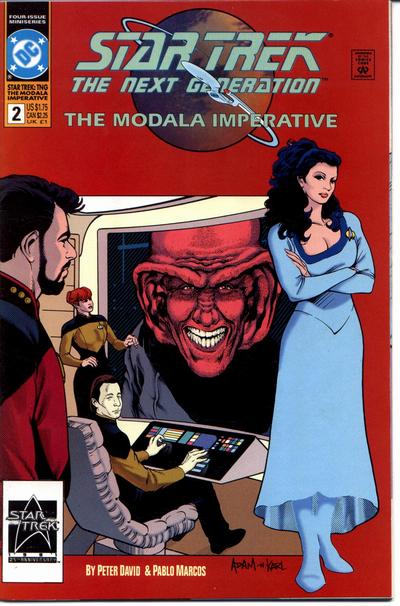
DC also produced The Modala Imperative, a cross-over of sorts with a story that began in a four-issue classic Trek series and concluded in a TNG mini.

This time period also saw a Deep Space Nine comic, but it was Malibu, not DC, that picked up the license. They produced fifteen issues of an ongoing, plus several separate mini-series.
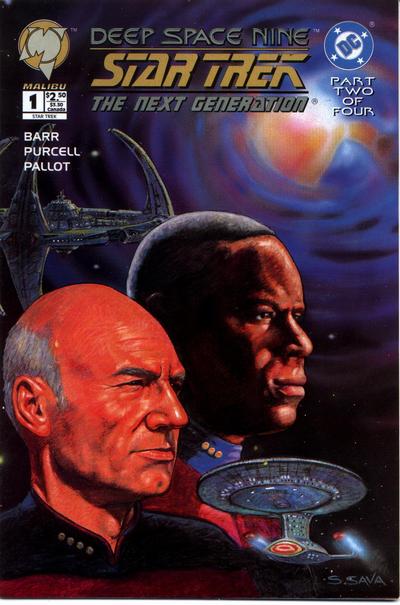
DC and Malibu even cooperated on a DS9/TNG crossover mini, with each company publishing two parts of the four part series.
Both of the ongoing Trek series from DC lasted another 80 issues before DC the license lapsed at the end of 1995. Malibu's license ended at this time too, and Paramount did not renew any of the Trek licenses. But that was not the end of Trek comics; Paramount had plans of their own, which we'll see in Part 2 (coming real soon, I promise!)
(all images courtesy of the GCD)
Subscribe to:
Posts (Atom)

